Snorkel the world's second-largest barrier reef, swim beside nurse sharks at Shark Ray Alley, float through ancient Maya caves, and climb jungle pyramids. Hand-picked tours, real reviews, and insider tips from the team at Eye To Ad Media.
If you do one thing in Belize, make it a guided day with Inland & Sea Adventures. They run the classic Hol Chan Marine Reserve & Shark Ray Alley snorkel trips and inland combos — zip-lining, cave tubing, Altun Ha, the Belize Zoo and Maya ruins — with small groups, sharp local guides, and gear that's actually maintained.
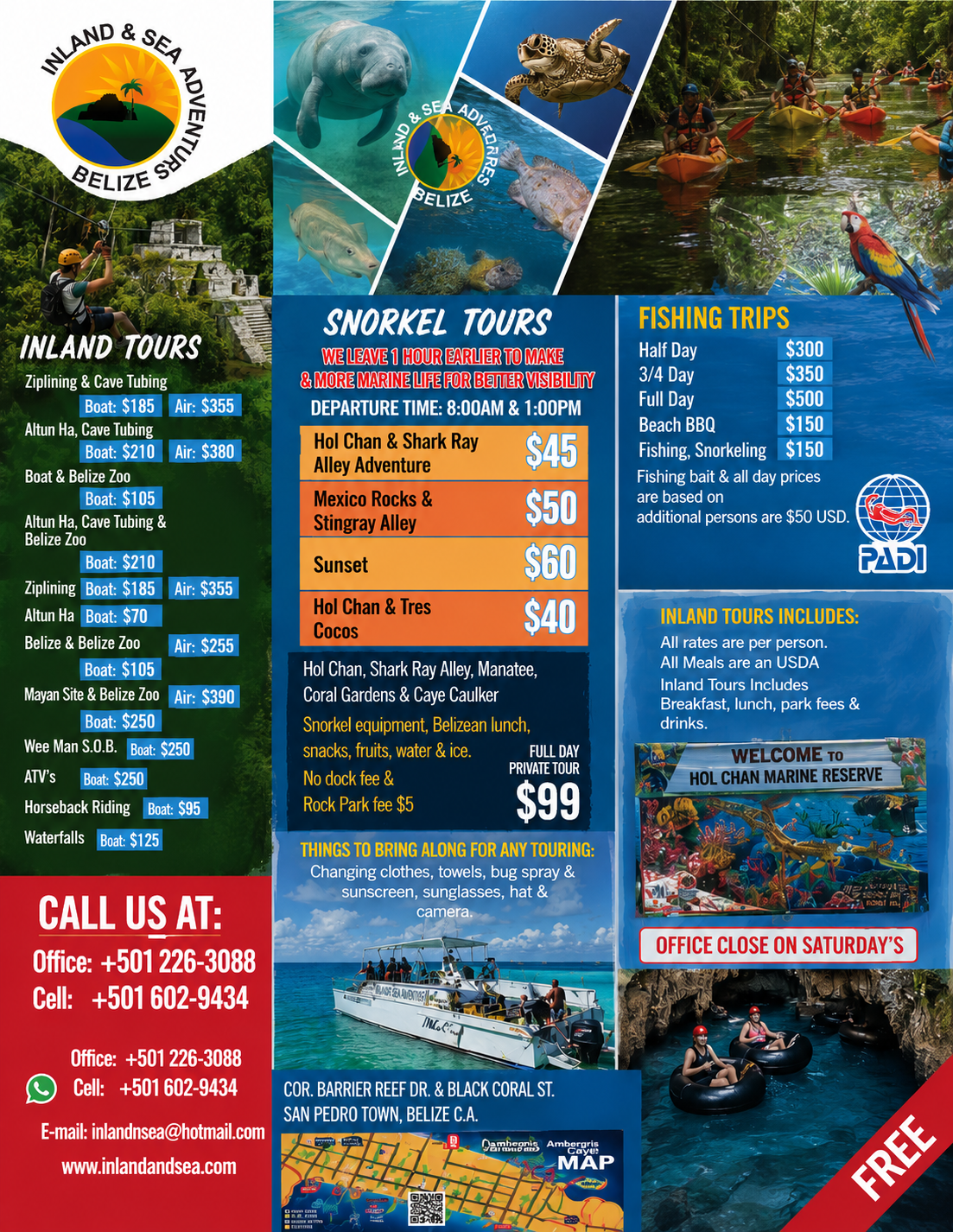
Reef snorkeling at Hol Chan & Shark Ray Alley, plus inland day trips:
• Ziplining & Cave Tubing
• Altun Ha & Cave Tubing
• Boat & Belize Zoo / Mayan sites
• ATV, horseback riding & waterfalls
• Guided fishing charters
We don't hand out our top recommendation lightly. Before we put any operator at the top of Best Belize Adventures, we go out with them ourselves — and Inland & Sea Adventures didn't just meet the bar, they reset it. From the moment our team stepped onto the boat in San Pedro, the day felt less like a packaged tour and more like being shown around by friends who happen to know every inch of the Belize Barrier Reef.
The reef day pairs the two headline stops of Hol Chan Marine Reserve: the Hol Chan Cut — a 75-foot-wide, 30-foot-deep channel sliced through the reef where the fish are famously big and unbothered — and Shark Ray Alley, the shallow sand flat where nurse sharks and southern stingrays glide right up to you. Our captain timed the tides so we could drift the Cut instead of fighting the current, and he parked us over seagrass long enough to watch a green turtle graze without a single other boat crowding in. Little decisions like that are the difference between a good snorkel and an unforgettable one.
What sealed it was the care. Every mask sealed, every fin fit, and the crew kept a genuine eye on the nervous swimmers in our group instead of leaving them to fend for themselves. Safety briefings were clear, the pace was relaxed, and nobody got hustled back onto the boat before they were ready. That blend of local expertise, small-group attention and honest, no-pressure service is exactly what we want to send our readers toward.
Inland & Sea aren't only a reef outfit, either — they run the full inland side of Belize too, from zip-lining and cave tubing to Altun Ha, the Belize Zoo and the great Maya sites. We enjoyed our snorkel day so much that we're already planning to head back out with them for a guided fishing charter and a Maya ruins tour. If you're building a Belize trip and want one trusted team for both the sea and the jungle, start your inquiry with them.
Scratch the card to reveal your exclusive savings on any Inland & Sea Adventures booking. One prize per visitor.
*Discount applied to eligible tour bookings. Mention your code when you inquire below. 10% off $1,000+ or 5% off $500+.
Belize packs more into a small country than almost anywhere in Central America: a UNESCO barrier reef offshore and jungle temples, caves, and waterfalls inland. Here are the experiences worth building your trip around.
Belize's most famous snorkel site — a protected "little channel" alive with coral, parrotfish, moray eels, sea turtles and eagle rays, about 15–20 minutes by boat from San Pedro.
Slip into shallow, clear water and snorkel shoulder-to-fin with harmless nurse sharks and southern stingrays. Added to Hol Chan in 1999, guided, safe, and a family favorite.
Float on an inner tube down the Caves Branch River through the Nohoch Che'en cave system once used by the ancient Maya — headlamp on, stalactites overhead.
Actun Tunichil Muknal — ranked the world's #1 sacred cave by National Geographic. Wade through underground rivers to Maya ritual chambers, 1,400+ artifacts and the Crystal Maiden.
Cross the hand-cranked Mopan River ferry and scale El Castillo, a 130-ft pyramid with a carved stucco frieze and views clear into Guatemala.
A 1,043-ft-wide, 407-ft-deep sinkhole at Lighthouse Reef that Cousteau ranked a top dive site. The scenic flight beats the long boat dive for most travelers.
Plunge across the rainforest on platforms high above the forest floor, usually combined with a cave-tubing day for the ultimate high-and-low combo.
Drop in after dark to spot octopus, lobster, crabs and species you'll never see by day — one of Belize's most underrated experiences.
We just launched a companion site dedicated entirely to the underwater side of Belize — spot-by-spot guides, marine-life breakdowns, and the season-by-season conditions that make or break a trip.
Explore the best snorkeling in Belize →Deep-dive guide: the best snorkeling Belize spots, from Hol Chan to Mexico Rocks and the outer atolls.
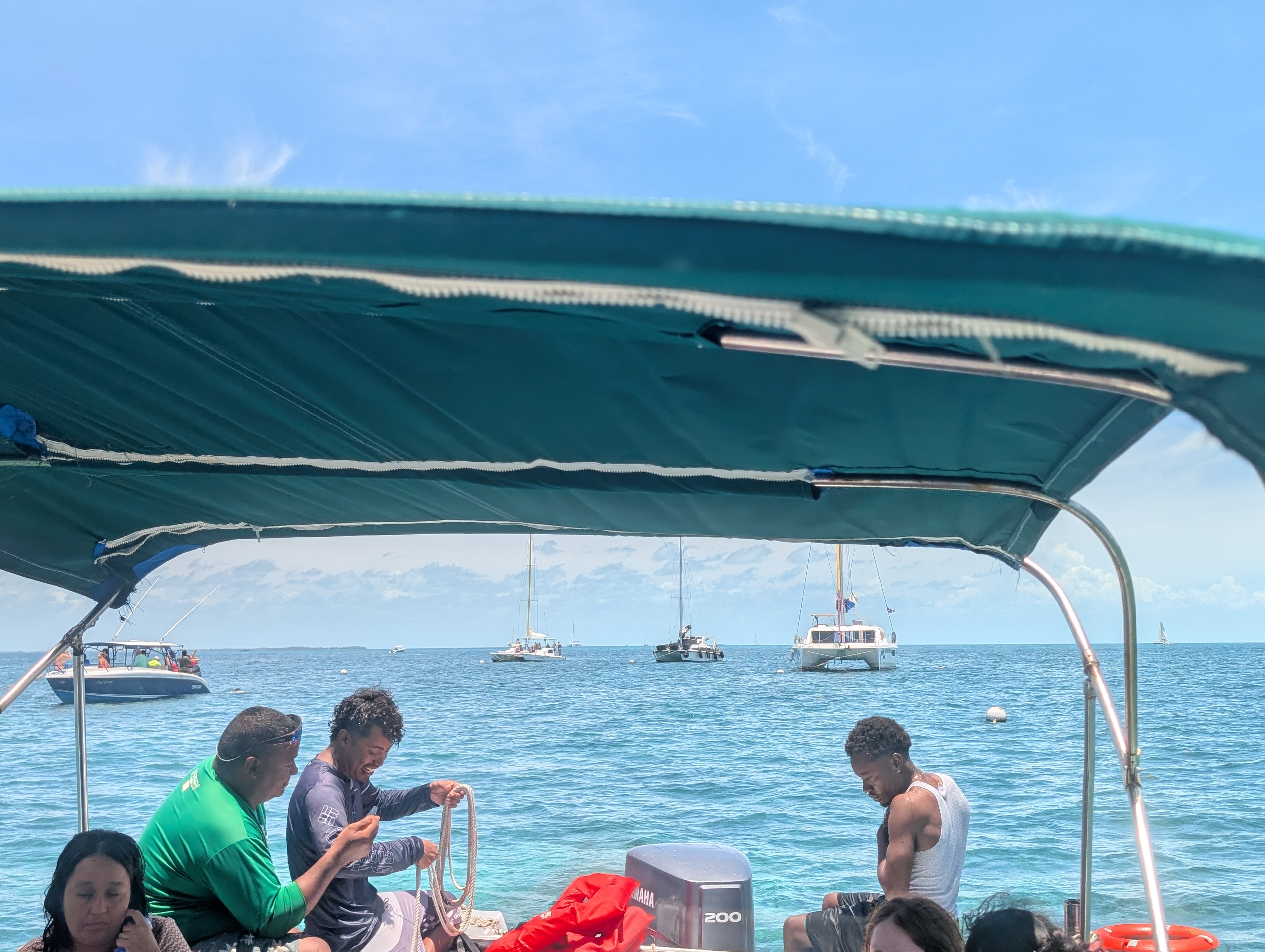
Comfortable boats, local captains, and the best drop-in spots on the Belize Barrier Reef. Inland & Sea Adventures gets you to the coral, the turtles and the sharks safely — and makes the whole day effortless from dock to dock.
Book a Reef Tour →No trip to Belize is complete without getting in the water. The Belize Barrier Reef is the second-largest reef system on Earth and a UNESCO World Heritage Site, stretching roughly 190 miles down the coast. In the north it sits just a few hundred meters offshore, so you're floating over living coral within minutes of leaving the dock. More than 160 species of fish have been recorded in the reserve waters alone, along with dozens of coral species, three kinds of sea turtle, and marine mammals including the gentle West Indian manatee.
The signature day trip runs out of San Pedro on Ambergris Caye — about 15 to 20 minutes by boat — or from Caye Caulker, roughly 40 minutes away. Its two headline stops sit inside Hol Chan Marine Reserve, Belize's very first marine protected area, legislated back in July 1987. "Hol Chan" is Mayan for "little channel," a nod to the natural cut sliced through the barrier reef that gives the reserve its name and its magic.
The heart of the reserve is the Hol Chan Cut, a natural break in the reef about 75 feet (23 m) wide and 30 feet (9 m) deep, located roughly four miles southeast of San Pedro. Because fishing has been banned here since the 1980s, the fish are both abundant and remarkably relaxed — schools of grunts, snappers and jacks part around you rather than bolting, and lucky snorkelers spot spotted eagle rays cruising the edges of the channel. The Cut is a two-way door for marine life, letting creatures move from the open Caribbean into the sheltered lagoon and back, which is exactly why the biodiversity here is so dense.
The reserve is carved into distinct management zones by ecosystem — the reef channel, the seagrass beds, the mangroves, and Shark Ray Alley — and a major 2015 expansion grew it more than tenfold to protect coral reefs, seagrass meadows, mangrove islands and vast sand flats around Ambergris Caye. Most tours focus on the channel and Shark Ray Alley, but a good operator can also take you drifting over the seagrass, where green turtles graze all day and the occasional shy manatee appears, or past the mangroves that serve as a nursery for juvenile fish and the odd seahorse.
The one thing first-timers underestimate is the current. Depending on the tide, water rushes either into the lagoon or out toward open sea, and travelers who try to fight it spend the whole stop exhausted instead of enjoying the view. The trick — and the mark of a good guide — is to drop in up-current and simply float, letting the water carry you over the coral canyons like a slow-motion flight. It's another reason a strong local operator matters: they read the tides so you don't have to.

Slip into shallow, crystal water and snorkel calmly beside harmless nurse sharks and southern stingrays — one of Belize's most jaw-dropping, family-friendly experiences, guided every step of the way.
Reserve Your Spot →If Hol Chan is the reserve's soul, Shark Ray Alley is its showstopper. Added to Hol Chan as Zone D in September 1999, it's a shallow, sandy-bottomed patch inside the reef that became legendary almost by accident. Fishermen used to pause here to clean their catch on the way back to port, and the scraps drew in nurse sharks and southern stingrays. Over the years the animals learned to associate the sound of boat motors with food, and today they gather in the shallows as tours arrive — completely accustomed to snorkelers hovering above them.
The result is one of the safest wildlife encounters in the Caribbean. Nurse sharks are docile bottom-feeders, and the southern stingrays here are used to human company. In water often just a few feet deep and lit up turquoise by the white sand below, you can watch a dozen or more sharks sweep beneath you while rays ripple across the bottom. Guides feed them from the boat under reserve rules, which keeps the animals close and the experience predictable — ideal for families and first-time snorkelers who want a guaranteed encounter.
A quick note on doing it responsibly: the reserve asks visitors to keep hands to themselves, avoid touching the coral or the animals, and follow the guide's lead. Wearing a rash guard is smart both for sun protection and for peace of mind. Because Shark Ray Alley sits only about a mile south of the main Hol Chan Cut, nearly every tour combines the two into a single half-day trip — roughly $50 to $85 per person in 2026, typically including gear, transport from San Pedro and the marine park fee.
Most tours collect the Hol Chan marine reserve entrance fee (paid in cash on the day, usually around $10–$15 USD per person) and issue a paper wristband that acts as your ticket into the protected zones. Standard half-day group tours run about three to three-and-a-half hours, departing in the morning (best visibility and calmest water) or early afternoon, and spend roughly 45 minutes in the channel and another 30–40 minutes at Shark Ray Alley. Booking two to four weeks ahead in the busy December–March season locks in your preferred departure and better pricing.
Ready for more than the headline sites? Mexico Rocks and Coral Gardens offer gentler, shallower snorkeling ideal for beginners and kids, with coral heads rising close to the surface for an easy, colorful swim. Farther out, the three atolls — Turneffe, Glover's and Lighthouse Reef — deliver world-class visibility for travelers willing to make the longer boat trip. Belize is one of only a handful of places on the planet with true coral atolls, and remarkably, all three in the entire Western Hemisphere sit right here off its coast.
Lighthouse Reef is home to the crown jewel of them all, the Great Blue Hole — a near-perfect circle of deep sapphire water about 1,043 feet (318 m) across and 407 feet (124 m) deep, roughly 43 miles offshore. It began as a limestone cave system during the last Ice Age, when sea levels were about 400 feet lower and the caverns were dry; as the oceans rose the caves flooded and the roof collapsed, leaving the vertical shaft you see today. Jacques Cousteau brought his ship Calypso here in 1971 and declared it one of the world's top dive sites. Deep divers still descend past 130-foot stalactites that formed over 150,000 years ago, though most visitors take in the full sapphire-and-turquoise contrast on a scenic flight instead — often the smarter call for anyone who isn't an advanced diver.
For the full spot-by-spot breakdown, our sister guide to the best snorkeling in Belize covers each reef, what lives there, and the season-by-season conditions that make or break a trip. Insider tip: in most of Belize you can't just wade in off the beach — the reef is offshore, so a guided boat tour with a strong operator is the way to go.
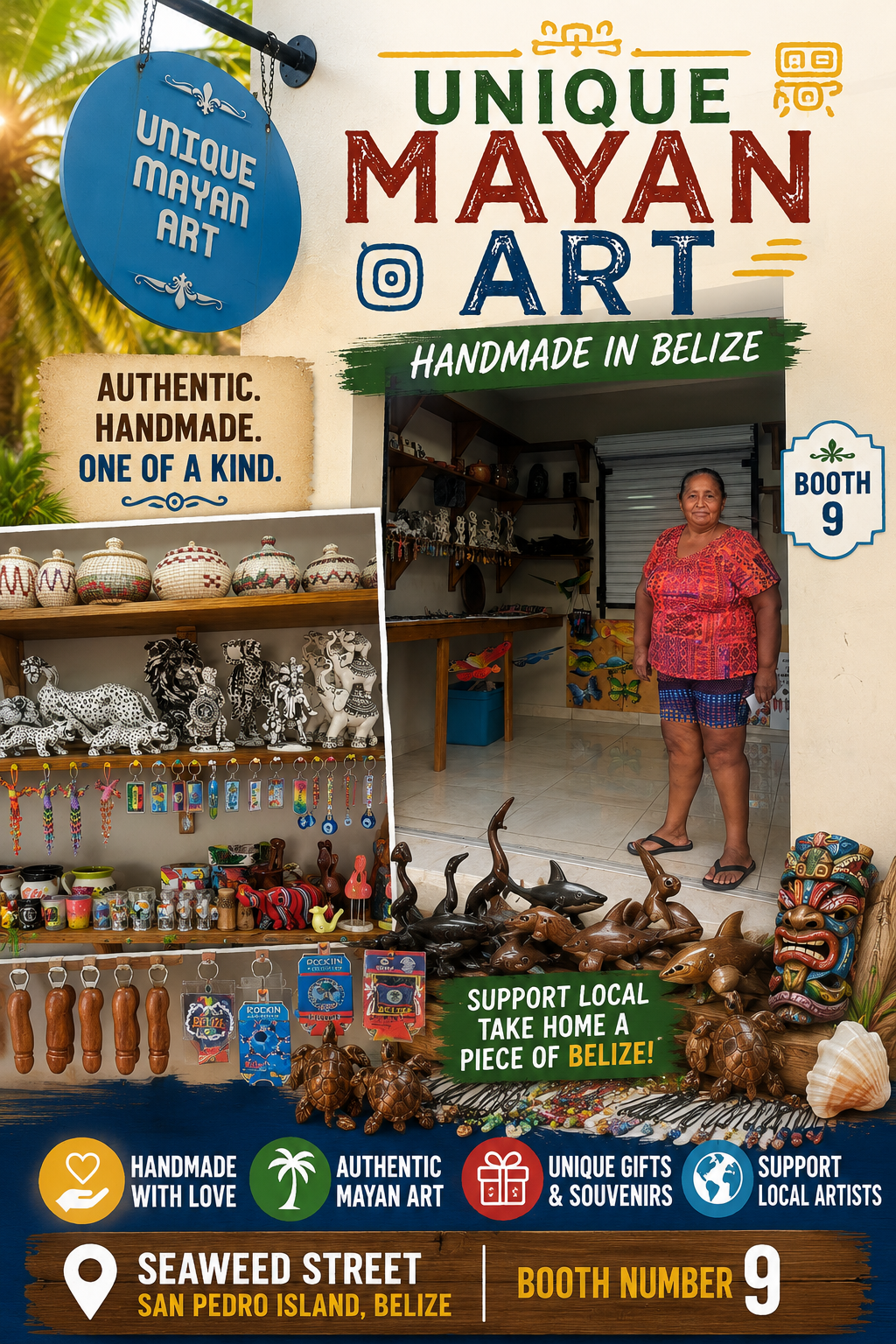
Browse authentic Mayan-inspired art, carvings and keepsakes made by Belizean artisans in San Pedro — a meaningful alternative to mass-produced souvenirs that puts money straight into the community.
Plan Your Trip →Belize isn't only reef and jungle — its culture is a rich blend of Maya, Garifuna, Creole and Mestizo traditions, and Ambergris Caye wears that mix openly. Between adventures, San Pedro's galleries and street stalls fill with handmade carvings, paintings and jewelry created by local artisans, much of it drawing on Maya motifs and Caribbean color. Buying a genuine handmade piece supports the community directly and sends you home with a keepsake that carries a real story rather than a factory barcode.
The island itself has deep roots: Ambergris Caye was originally settled by the Maya, who used it as a trading waypoint on a route stretching from present-day Mexico south toward Honduras. That heritage still surfaces today — in the place names, in the cuisine, and in the ceremonial sites that dot the mainland just a boat or short flight away. Spending a little time with the culture between water days rounds out a Belize trip in a way the postcards never quite capture.
Belize's interior is every bit as thrilling as its coast — and it's what makes Inland & Sea Adventures' name so fitting. Near San Ignacio in the Cayo District, the classic combo is a morning drifting through cave-tubing caverns and an afternoon zip-lining over the forest canopy, the "go high and low" day that guides love to run together.
Cave tubing has become Belize's single most-requested land tour, and for good reason. The most popular site is the Nohoch Che'en Caves Branch Archaeological Reserve, roughly 40 minutes from the international airport and about an hour to ninety minutes from San Ignacio. After gearing up with a helmet, headlamp and inner tube, you take an easy 45-minute hike along a flat jungle trail — a gentle introduction to Belize's biodiversity — before reaching the cave entrance. From there you settle into your tube and float a gentle river as it winds through cathedral-like caverns the ancient Maya considered sacred, stalactites and crystal formations passing overhead in the beam of your headlamp. The current is calm, the water is cool and refreshing, and the whole thing is genuinely family-friendly.
For the serious adventurer, the Actun Tunichil Muknal (ATM) Cave is unforgettable — National Geographic ranked it the #1 sacred cave on Earth. Its name means "Cave of the Stone Sepulchre," and the Maya knew this underworld as Xibalba, a "place of fear" where death gods were said to reside. Discovered in 1989 and opened to the public in 1998, the cave sits inside the Tapir Mountain Nature Reserve near San Ignacio.
Reaching it is part of the experience. Tours typically leave San Ignacio around 8 AM; you hike about 45 minutes through jungle, fording a river three times, then swim into the cave's hourglass-shaped mouth and wade an underground stream past towering boulders. Deep inside lies the Cathedral, a vast dry chamber where more than 1,400 catalogued artifacts — pots deliberately punctured with "kill holes," bloodletting altars, and ceremonial stoneware — still rest where they were left over a thousand years ago. Among them are 14 skeletons, victims of sacrifices meant to appease the gods in times of drought. The most famous is the Crystal Maiden, a calcified skeleton whose bones sparkle in headlamp light thanks to a coating of glittering calcite.
A few important notes: ATM is physically demanding, involving swimming, wading, and scrambling over rock, so it isn't right for everyone — children under 12 generally aren't permitted. Access is strictly guide-only through a small number of licensed operators, and since a camera was dropped on a skull years ago, no cameras or phones are allowed inside. Bring water shoes, a change of clothes, and a sense of reverence; you'll be walking through a sacred space, in wet socks, past the dead.
Above ground, Xunantunich is one of Belize's most accessible and rewarding ruins. Perched on a limestone ridge above the Mopan River near San Ignacio — just a kilometer from the Guatemalan border — it's reached by a charming hand-cranked ferry across the river. Its name means "Stone Woman" or "Maiden of the Rock," after a legend, first recorded in 1892, of a ghostly woman in white with glowing red eyes who ascends El Castillo and vanishes into the stone. The city flourished in the Late and Terminal Classic periods (roughly 600–900 AD), when as many as 200,000 people lived across the Belize Valley. Its crown jewel, El Castillo, rises about 130 feet (40 m) — among the tallest structures in the country — and is wrapped in a remarkable stucco frieze depicting the sun god, moon and Venus. Climb it and you're rewarded with sweeping views across the jungle canopy and clear into Guatemala.
For the truly adventurous, Caracol is the giant — the largest Maya site in Belize, once home to well over 100,000 people, hidden deep in the Chiquibul Forest Reserve on the Vaca Plateau. At its heart stands Caana, the "Sky Palace," which at around 141 feet (43 m) remains the tallest man-made structure in all of Belize to this day. The road in is long and rough, so most travelers visit on a guided full-day trip, often pairing it with a swim at the Rio On Pools. Whichever ruins you choose, pairing a temple climb with a cave or jungle day inland makes for one of the most memorable days of any Belize trip.
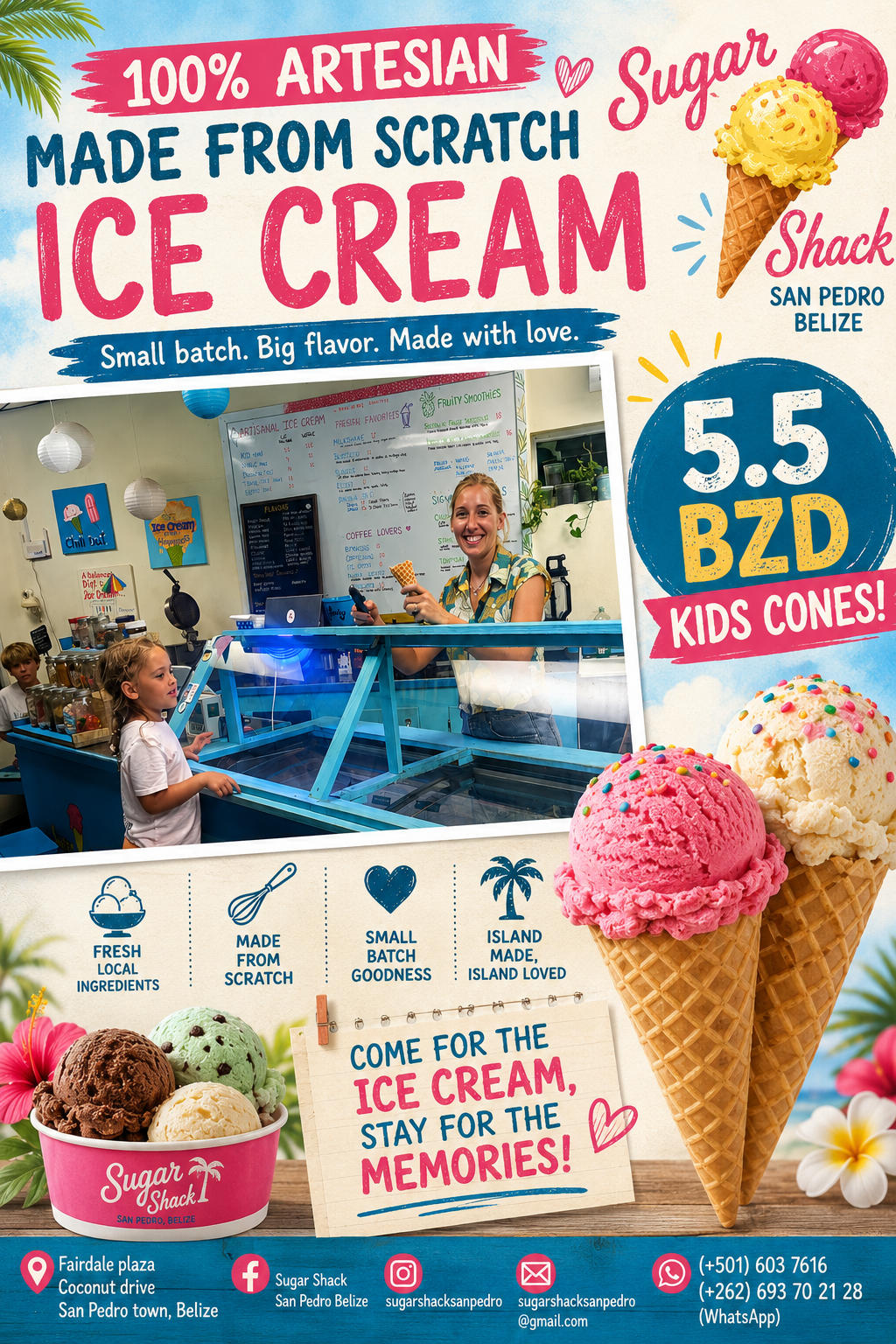
After a hot day on the reef or the ruins, nothing beats a scoop in the shade. This San Pedro favorite churns tropical flavors that keep families coming back all week long.
Add It To Your Day →Belize can be as affordable or as splurgy as you make it. A few moves stretch your budget without cutting the good stuff. Bundle your tours — combo trips like cave-tubing-plus-zip-line or Hol Chan-plus-Shark-Ray-Alley cost less than booking each separately, and a single operator like Inland & Sea can chain a reef morning and an inland afternoon so you're not paying twice for transport. Travel in the May–June shoulder season for warmer water, thinner crowds and better rates; just keep an eye out for occasional sargassum on the beaches. And book two to four weeks ahead in the busy December–March window, when last-minute reservations can run 20–30% higher.
Book the big-ticket adventures through reputable, well-reviewed operators — the guiding, safety and access are worth every dollar, and a good operator sequences your day so you're not paying for wasted time. Confirm what's included, too: many reef tours fold in the marine-park fee and gear, while ATM and Blue Hole trips have their own park and access costs. And don't forget the discount waiting for you: scratch the card near the top of this page to unlock 10% off bookings of $1,000+ (ADVENTURE10) or 5% off $500+ (ADVENTURE5), then mention your code when you inquire below.

All that snorkeling works up an appetite. San Pedro's beachfront kitchens run on fresh-caught fish, lobster in season, and cold Belikin — a local favorite worth walking off the dock for after a day on the water.
Plan Your Trip →Tell us what you want to experience and we'll help you lock in the right guided tour with Inland & Sea Adventures — reef, jungle, ruins, fishing, or all of it. Fast, no-obligation.